





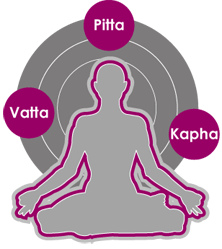
Everybody knows Yoga, but many of us may not know Yoga as a part of Ayurvedic Therapy. Yoga is a sister science of Ayurveda. Both of them carry the origin and same principles. Although having the same origin, until now Yoga has been modified and divided. Most of us know Yoga as a physical exercise which depicts nothing but limited knowledge of Yoga.
Literally, Yoga means union. Yoga is a tool to unite your body and mind; you and the universe, soul to supreme soul; five elements inside you to the five elements outside and much more. Both Yoga and Ayurveda are holistic approaches to study your body, mind, sense and soul.
In the eyes of Ayurveda, every individual in this universe are unique, typical and indifferent. We are different due to the manifestation of our inborn energy in different proportion. That is called Doshas.
There are 7 types of persons according to the ratio of Vata, Pitta and Kapha doshas. We are not different from outlook; everyone is different in terms of physical, mental, physiological, social and spiritual aspects. Having the different Prakriti (Body type), Ayurveda suggests doing everything differently according to your Doshas. Vata, Pitta and Kapha person should act accordingly to their dominant doshas that include diet, work, exercise, Yoga, job, hobbies, treatment, therapy etc.
Have you noticed, a group of people doing yoga in the same room. Everybody has not the same feeling and many people are giving up Yoga classes soon after their first try. Have you thought, what is the reason?
Let’s remember the fundamental principle of Ayurveda. Everybody of us has different height, weight, breathing habits, holding capacity, flexibility, and body strength due to different body types. If we are different, doing the same Yoga postures, breathing and meditation may not be effective. Proper knowledge of your body type and diagnosis about the imbalance by an Ayurveda specialist will guide you to choose the right Yoga. Let’s discuss how to choose Yoga for your body type.
Yoga for Vata Personality
Vata personality is characterized by dry, cold, light, quick and irregular. We have to balance these qualities by imparting the opposite qualities. Vata people are physically tall, short, non-muscular and thin.
- They need to get balanced by warming poses and breathing exercise.
- Enjoy sleeping and sitting poses than standing and exerting poses. Regular exercise and especially breathing are important.
- Let them do slow exercise with the rhythm of breathing.
- Their mind is fluctuating and flying away, singing, chanting type of meditation is effective.
- Vata personality needs to balance their Heart and throat Chakras.
Asanas recommended for Vata (Posture)
- Bhujang Asana
- Siddha Asana
- Vajra Asana
- Dhanur Asana
- Pavanamukta Asana
- Paschimottan Asana
- Hala Asana
- Mandook Asana
Pranayama (Breathing Exercise)
- Bhastrika Pranayama
- AnulomVilom Pranayama
Mudra
- Vayu Mudra
- Hridaya Mudra
- Dhyana Mudra
- Apana Mudra
- Shoonya Mudra
- Gyana Mudra
Yogic Kriya
- KunjalKriya
- ShankhPrakshyalan
Yoga for Pitta type personality
Pitta personality is characterized by Hot, Sharp, Mobile, Oily and Sticky. Pitta person has a moderately developed physique and muscular limbs. Their body is often red, hot and Sweaty. They need the cooling relaxing type of Asanas, Pranayam and meditation. Pitta likes challenges and competition, but they need to control these habits.
- Pitta person should practice slowly and rest between every pose.
- Relaxing poses like Savasana is advised between other asanas.
- They must not do sweating and tiring practice.
Pitta people can do light sensitive meditation, which can be done in the dark room or eyes covered with an eye pad. Guided meditation with music, sounds and mantras are effective.
Pitta people needs to balance their Solar Chakras.
Asanas (Postures)
- Dhanurasana
- Bhujang Asana
- Ardhamatsyendra Asana
- Shalabh Asana
- Trikon Asana
- Paschimottan Asana
- Makarasana
- Shava Asana
Pranayama (Breathing Exercise)
- Chandra bhedi Pranayama
- Bhramari pranayama
- Sheetali
- Shitkari
Mudra (hand alignment )
- Dhyan Mudra
- Gyana Mudra
- Prana Mudra
- Varuna Mudra
Yogic Kriyas
- KunjalKriya
- Sutra Neti in Milk
Yoga for Kapha type personality
Kapha personality is characterized by thick, large, slow, wet, and sticky. Kapha person has a thick body frame, large bone and muscles and relatively short. They many have difficulty in sitting in full lotus. They have a lot of potential energy and don’t enjoy exerting themselves.
- Kapha needs quick, warming, sweating, exerting type of Yoga.
- They can do standing poses and intensive fiery breathing exercise.
- Kapha people are stubborn so they needed to guide.
- Meditation with singing, dancing, and chanting are effective.
Kapha people need to balance their Root and sacral Chakras.
Asanas (Postures)
- Gomukh Asana
- Bhujang Asana
- Tada Asana
- Katichakra Asana
- Dhanur Asana
- Nauka Asana
- Shalabh Asana
Pranayama (Breathing Exercise)
- Surya BhediPrayanayama
- Bhastrika
- Kapalbhati
Mudra (Hand Alignment)
- Surya Mudra
- Anjali Mudra
- Linga Mudra
Yogic Kriya
- KunjalKriya
- JalaNeti
- Sutra Neti
- ShankhPrakshalana
Note: This article is composed to co-relate the relationship between Yoga and Ayurveda. Personalized Yoga program is tailored by an Ayurvedic doctor after a consultation only.


Hello, interesting what you wrote…
Hi, that sounds great. Can you recommend any website where I can find instructions for these exercises?
Thanks :-)
very good information!
Hi,
nice article. one suggestion- you might define(?) the word dosha somewhere in the first couple of sentences.. I found I was reading, looking for.. but what is a dosha and how is this balancing it…:)
also- tech aspect… your widgets are really close to your text/article… i’m using current firefox on windows…. not sure if it is an alignment or widgets/sidebars margin issue- but it almost reads and looks as though the widget is over text…. that’s how close its reading for me:)
tnx
Teri