





Most people may experience low back pain at certain stages of their life span. This pain can vary from mild to severe. It can make everyday activities difficult to perform. No work can be performed without movement of back bone. The lower back pain is the most common cause of job related disability. Improper posture of walking, sitting and working may give stress to spine can cause anatomical problems in vertebrae. Chronic back pain is a major cause of social and financial concern as it is related with associated with impaired quality of life, loss of productivity and large health care expenses.
Most acute back are due to disorders such as arthritis, trauma, injury and accident. Pain and strain may be caused by a sports injury, work around the house or in the garden, or a sudden jerk or stress on spinal bone and tissues.
Symptoms
- Symptoms may range from mild muscle ache to shooting or stabbing type of pain.
- Limited flexibility and range of motion of leg also inability to stand straight properly.
- Pain may radiate elsewhere in the body, with movement.
- Chronic pain is measure as per duration persists for more than 3 months is considered chronic. It may be progressive and the cause may be different.
Causes of lower back pain
- Most back pain is due to injury or trauma to the back.
- Degenerative changes in the spine such as arthritis or osteoporosis or other bone diseases, viral infections, irritation to joints and disc or congenital abnormalities in the spine.
- Weak lower back muscle, bone strength, and decreased muscle tone.
- Improper sitting and sleeping posture.
- Occupational problems.
- High heeled shoes.
- Inter vertebral disc prolapsed/bulge.
- Lifting heavy weight or over stretching causing sprain and spasm of muscle or ligaments in the back.
- When the nerve roots in the back is irritated or compressed.
- Obesity, smoking, over weight gain during pregnancy, stress, poor physical condition, improper postures for doing daily works increase risk of back pain.
Yogic management of lower back pain
- Om chanting and prayer
- Spinal exercise: The simple spine movements facilitate the practice of further range of yogic techniques by loosening the joints and muscles.
- Sukshma Vyayama : Kati-sakti-Vikasaka (Strengthening the back)
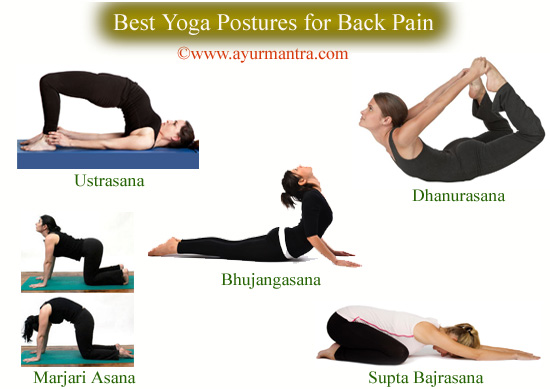
- Yogasanas: Tadasana, Urdhwa Hastottanasana, Katichakrasana, Ardha Chakrasana, Ushtrasana, Vakrasana, Marjariasana, Sarala Matsyasana, Bhujangasana, Salabhasana, Makarasana, Shavasana
- Pranayama: Nadisodhana Pranayama, Suryabhedana pranayama, Bhramari Pranayama
- Dhayana (Meditation)
Health tips for healthier lower back
- Always stretch well before exercise or any other physical activity.
- Don’t lean forward abruptly while standing or sitting. Try to keep your body weight equal on both feet while standing.
- Make your work place or home, make work surface at comfortable height.
- Sit on a chair with good lumbar support and proper position and height for task. Keep your shoulder and back relaxed.
- Use comfortable low heeled shoes.
- Sleep in the side to reduce any curves in the spine. Always sleep on a firm surface.
- Don’t try to lift objects which are too heavy. Do not twist when lifting.
- Maintain proper diet and exercise habit to reduce the unwanted weight.
- The diet with sufficient intake of calcium, phosphorus and vitamin D which promote the bone health.
- Quit smoking habit, avoid excessive stress and take proper rest.
- Avoid oily, spicy, junk food, packaged food items.


Leave a comment