





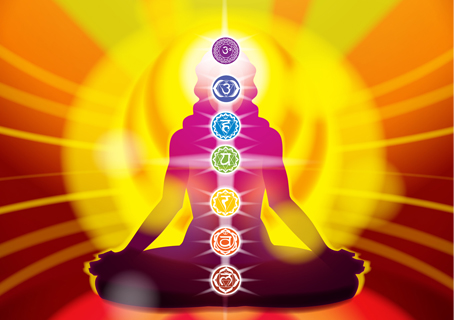
According to the Principle of Ayurveda, the three Doshas or Humours are considered to be the basic of human bodies and the diagnosis and treatment mainly depend on their imbalance. It is probably because of this that there is a common belief that Ayurvedic people never knew anything about the different structures of the body and their functions and the belief is rather erroneous.
One may probably be astonished to hear that people in the very ancient days used to perform dissection on dead bodies but in slightly different way. Covering the bodies with some particular leaves and tendrils they used to immerse the bodies in water. From time to time, they used to wipe the bodies with a soft brush made from more twigs when layer by layer to tissues separated out. The layers were minutely examined using ‘Kanchan’ or magnifying glass (Lens) and the findings described in detail.
Thus the skin is described as having seven layers like Avabhasini, Lohini, Swetha etc. named according to their appearance or the function they do or the like. Their thickness is fraction of Vreehi or size of the paddy corn corresponding to fractions of a centimeter. Their functions, appearance, the disease, likely to affect each layer of layers together are all described. The classification of the skin almost corresponds to the modern description of the skin as having layers of Stratum corneum, Stratum Lucidum, Stratum Granulosum etc. with some minor overlapping. Similarly descriptions about the other structures like the different varieties and numbers of bones (asthi), joints(Sandhi), Muscles (Pesi), tendons (kandara), nerves (nadi), Arteries (Dhamani), Veins (Sira), Ligaments (Snayu) organs (Asaya) etc. are there. These are mentioned in more details in work on Sallyathantra or surgery as in Susruthasamhita.
It is again an erroneous belief that ancient Ayurvedic people never knew anything about the different systems in the body and their functions. The way the digestive system is described in very interesting. The food with different constituents possessing six kinds of Rasa or Tastes in varying proportions is taken by mouth in an undigested or raw tastes in varying proportions is taken by mouth in an undigested or raw (Ama) form. It is retained in the stomach, blocked in its passage as by a hold-fast mechanism till it is digested by Panchakagni in the stomach and upper intestine. (panchakarma Stage) and the food materials after proper digestion are sent down (Pakwa Stage) when the essence or Saara is separated and the residue or kitta is excreted as Pureesha or Mala (faeces). The Saara is converted to Rasa (Chyle) which joins the blood having been reddened in the Yakrit (liver) and Pheeha (Spleen) where Ranjaka pitha gives its red colour.
The transformation of the Rasa into the different tissues is effected by Dhatawagnis. Grahani is a very important part as it is responsible for retaining the food for enough time for digestion. Its weakness leads to the disease “Grahani”. Grahani is an important word in other disease as well, as digestive disturbance play a major role in the production of disease.
Blood and lymph circulations have been described in Ayurvedic classics many many centuries ago. Dhamanis (Arteries) and Siras (Veins) are spread in the body like the veins in a leaf through which blood circulates and gives nutrition to the part, like fields irrigated with water sent through irrigation channels. Filtration of waste materials and subsequent excretion are also described.


it is the best illustration of the body. body is composed by DOSHA, DHATU, MAL SOUL AND MIND .according to AYURVEDA , it is very necessary for every body to understand the views of Ayurveda, in the form to understand Ayurveda. because we have to learn first the fundamentals and principles of Ayurveda. because with PRATKSHYA, ANUMAN AND APTODESH are the three sources of know ledges.so in our science every things are described very beautifully. we love and learn Ayurveda.