
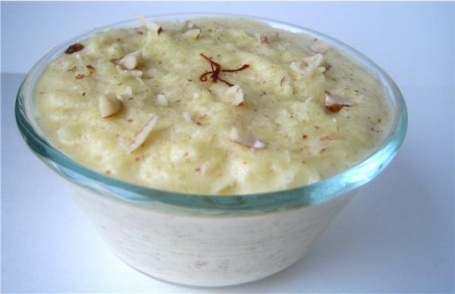
Home Ayurvedic Recipes Kheer ( Rice pudding)
Ayurvedic Recipes

Kheer ( Rice pudding)

Share
Share
kheer
kheer

According to Ayurveda, the three Doshas are mainly responsible for the proper functioning of the human organism. Kheer is the best ayurvedic recipes common in the kitchen All Ayurveda recipes for Doshas use natural ingredients for preparing the food. These Ayurveda recipes for Doshas are cooked in simple style and are easily digestible. Kheer is Ayurvedic food for balancing all the three doshas separately.

Ingredients

  • 2 1/2 cups (600 ml) of whole milk
  • 1/3 cup (66 grams) of uncooked short grain white rice
  • Pinch of salt
  • 1 egg
  • 1/4 cup (50 grams) dark brown sugar
  • 1 teaspoon of vanilla extract
  • 1/4 teaspoon of cinnamon
  • 1/3 cup (40 grams) raisins

Direction:

  • Place the rice in a heavy pan and add the milk. Bring to boil and simmer for 1 hour.
  • Add the almond powder. Add more milk as desired. (coconut milk is an interesting change).
  •  Soak the strands of saffron in a tablespoon of milk for 10 minutes to extract its golden pigment and then add to rice pudding.
  • Add cardamom and rose jam.  Serve and add ghee, virgin coconut oil or honey as desired.
  • You can also add grated carrots or beetroots to this recipe for a colourful and nourishing variation.
  • Add two teaspoons of Shatavari and cardamom to make a cooling, antacid recipe, good for women, and an aphrodisiac.
  • Serve warm or cold.

Benefits:

This is a very nourishing food for reducing vata and pitta, strengthening the tissues and building reproductive tissues. it is easily digestible and it increase your appetite. This is comfort food and is high in carbohydrates from the rice and sugar, calcium from the milk/cream added and if cinnamon is added – it apparently reduces cholesterol – although this is a bit contradictory with all the carbs and fat from the milk/cream.

Share
Written by
Dr. Ram Mani Bhandari

Dr. Ram Mani Bhandari is an experienced Ayurvedic physician and Panchakarma expert based in Australia. He is the founder of a successful Ayurveda wellness centre and has been passionate about writing since 2011. Trained in both India and Nepal—the heartlands of Ayurveda—he holds a Bachelor of Ayurvedic Medicine and Surgery (B.A.M.S.) from the Institute of Medicine at Tribhuvan University, Kathmandu. Dr. Bhandari’s areas of expertise include Panchakarma (Ayurvedic detox), Vastu (Vedic architecture), Jyotish (Vedic astrology), and Naturopathy.

Leave a comment

Leave a Reply

Your email address will not be published. Required fields are marked *

Related Articles
Ama in Ayurveda
Ayurvedic Recipes

Ama in Ayurveda: What Are Toxins and How to Remove Them Naturally

What Are Ama Toxins, Why They Matter, and How Ayurveda Helps You...

how to make medicated ghee at home?
Ayurvedic RecipesHerbal Uses

How to Make Medicated Ghee (Ghritam): An Authentic Ayurvedic Guide

A step-by-step Ayurvedic guide to preparing herbal ghee at home with authentic...

Ayurveda MedicineAyurvedic Recipes

Hot Pressed Oil Vs Cold Pressed Oil – The Basic Overview

The edible oil we use in cooking is generally hot pressed oil....

Ayurvedic Recipes

How to Prepare Paneer at home?

Paneer is one of the healthiest and low fat cheese forms originated...

Ayurmantra.com is your trusted space for expert-written articles, reviews, and insights on Ayurveda, yoga, nutrition, and natural healing. Stay connected to the latest in Ayurvedic wellness, news, and therapies from around the world.

Let's keep in touch

Subscribe to our newsletter to get our Latest Ayurveda articles instantly! Your privacy is important to us :

Disclaimer: All Information on Ayurmantra.com is for educational purposes only and not a substitute for medical advice, diagnosis, or treatment. Please consult a qualified healthcare provider. For more details, see Ayurmantra's Terms of Use.

Copyright 2024 www.ayurmantra.com All rights reserved powered by Webful Creations