
Home Food & Lifestlye How 6 tastes influence your mind and emotions?
Food & LifestlyeHealth Tips

How 6 tastes influence your mind and emotions?

Share
Ayurvedic taste and effect
Share

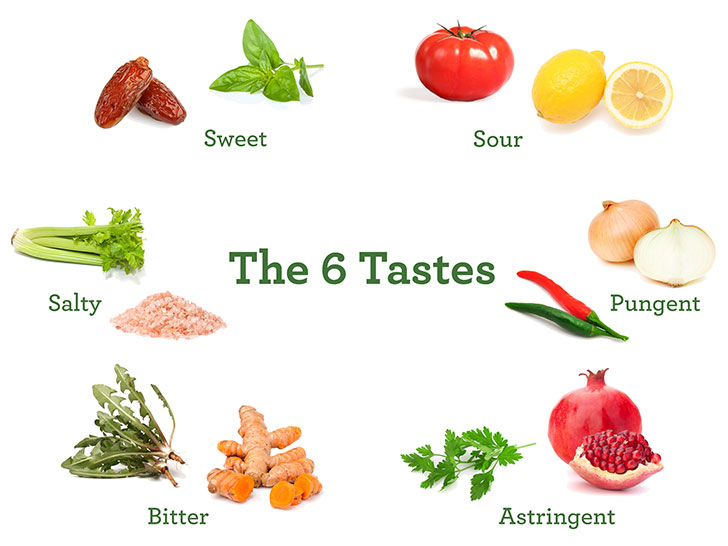
Even when we express our affection we use words like “Sweetie”, “honey”, “sweet heart” and so on.  This is the significance of sweetness. Sweet taste is often associated with feelings of love, care and compassion. If there is an imbalance of sweet taste or a lack of contentment, and through indulging in sweet foods, sweet taste brings positive memories, thoughts of loved ones and feelings of devotion. Likewise we offer chocolates and candy to our lovers as a token of love and friendship. Basically Sweet taste is the taste of compassion and satisfaction. If the sweetness is over, this brings possessiveness and attachment.

Sour taste is hot and sharp in nature which aids concentration, sharpening the intellect. This taste brings discrimination and stimulation. An imbalance of sour taste can cause feelings of anger, envy, Jealousy, and criticism which may be result of unfulfilled desires. For an example who complains a lot are referred to as a “sour apple” or sour puss”.

Salty taste enhances the flavor of the foods, and it is believed saly taste lifts the spirit and sparks interest in life. It brings confidence and increase the zest of life. Like Sweet, it increases Kapha energy which is related to emotions like possessiveness, greed and attachment.  Indulgence in salty taste promotes temptation, desires, greed and over ambitions.

Pungent taste is associated with the drive and motivation energy.  It brings boldness, vigor,  and vitality. It improves concentration and sharpness of thoughts. Indulgence in this taste can bring anger, violence and hatred.

Bitter taste is the taste opposite of Sweet. It brings hatred and dissatisfaction. This is taste aiding desires in celibacy and promotes introversion and introspection. In excess, it makes a person boring, isolation, loneliness, grief and sorrow.

6 tastes and Emotions
Ayurvedic taste and emotions

Astringent taste is composed of Earth element. Thus it is supporting and grounding which bring together scattered feelings, thoughts and emotions. When this is excess, it brings insecurity, anxiety, depression, absentmindness and fear.

Share
Written by
Dr. Ram Mani Bhandari

Dr. Ram Mani Bhandari is an experienced Ayurvedic physician and Panchakarma expert based in Australia. He is the founder of a successful Ayurveda wellness centre and has been passionate about writing since 2011. Trained in both India and Nepal—the heartlands of Ayurveda—he holds a Bachelor of Ayurvedic Medicine and Surgery (B.A.M.S.) from the Institute of Medicine at Tribhuvan University, Kathmandu. Dr. Bhandari’s areas of expertise include Panchakarma (Ayurvedic detox), Vastu (Vedic architecture), Jyotish (Vedic astrology), and Naturopathy.

Leave a comment

Leave a Reply

Your email address will not be published. Required fields are marked *

Related Articles
morning vs evening shower
Health Tips

Morning vs Evening Shower: Which One Is Better for Your Body According to Ayurveda?

Discover the Ayurvedic science behind morning and evening showers, and choose the...

Coffee in Ayurveda
Food & Lifestlye

Ayurveda & Coffee: How to Drink Coffee for Your Vata, Pitta or Kapha Dosha

Learn how coffee affects each dosha, how much to drink, the best...

fruits and dairy incompatibility
Food & Lifestlye

Why Fruits and Dairy Don’t Mix — The Ayurvedic Truth Behind Food Incompatibility

Fruits and milk are both nourishing — but when combined, they can...

why sleeping issue
Health Tips

Why You Feel Tired Even After Sleep: An Ayurvedic Look at Energy Drain

Understanding the Ayurvedic Causes of Fatigue and How to Restore Natural Energy

Ayurmantra.com is your trusted space for expert-written articles, reviews, and insights on Ayurveda, yoga, nutrition, and natural healing. Stay connected to the latest in Ayurvedic wellness, news, and therapies from around the world.

Let's keep in touch

Subscribe to our newsletter to get our Latest Ayurveda articles instantly! Your privacy is important to us :

Disclaimer: All Information on Ayurmantra.com is for educational purposes only and not a substitute for medical advice, diagnosis, or treatment. Please consult a qualified healthcare provider. For more details, see Ayurmantra's Terms of Use.

Copyright 2024 www.ayurmantra.com All rights reserved powered by Webful Creations