





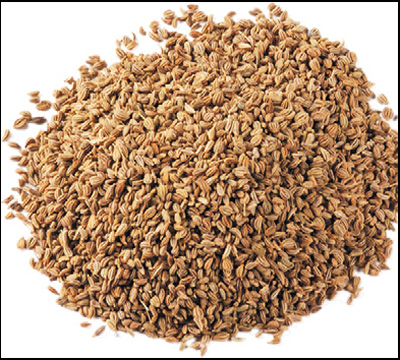
 As with all members of the Umbelliferae family with their ascendant flower and seed heads this is a digestive ‘lightener’. Its pungency and aromatic nature activate the digestive process and make light work of heavy food. Literally meaning ‘goat’s delight’, ajmoda is a delicious shrub.
Sanskirt name: Aja-moda
Latin Name : Apium graveolens-semen (Umbelliferae)
Energetics
Rasa (taste): Pungent
Virya (energy): Heating
Vipaka (post-digestive effect): Pungent
Guna (quality): Light, dry, penetrating
Dosa effect : Vata Kapha, Pitta
Srotas (channel) Digestive, respiratory, nervous, urinary
Constituents
Volatile oils D-limonene, alpha selinine, santalol, limonene type monoterpenes, phthalides Flavonoids Apiin, apigenin Coumarins Bergapten, celeroside, isopimpinellin
Ayurvedic Action:
Dipaniya Awakens digestion
Pachaka Digestive
Sulaprasamana Alleviates intestinal spasms
Anuloma Mild laxative, correct the flow of vata
Amanasaka Toxin digester
Biomedical action
Antispasmodic, carminative, nervine, galactogogue, diurectic, bronchodilator, expectorant
Indications
Lungs Asthma, Bronchitis, cough, sinus congestion. It actively helps to dilate the bronchioles by preventing spasm in the airways. It positively affects the flow of prana and udana vayu. Excess mucus accumulation, a sign of aggravated avalambaka kapha is ‘digested’.
Digestion Flatulence, borborygmus and intestinal cramps. Low agni is stimulated by the pungent volatile oils. Samana vayu is regulated and apana vayu encouraged to flow freely downwards. It encourage the natural downward movement of digestion.
Nerves Spasms, cramps and muscular tension. Obstructed vata is released by reducing tension throught out the whole nervous system; this directly regulates the tension versus relaxation balance in the smooth muscles. Ajmoda benefits heart pain caused by nervous constriction (Bhavaprakash). As an anti-spasmodic with the affinity for the lower abdomen it can also help ease the pain of dysmenorrhoea and menstrual cramps.
urine Ajmoda seeds is a specific herb for treating kidney and bladder discomfort from cold; frequent, pale urine with lower backache and nocturia (Bhavaprakash).
Joints Ajmoda is a specific herb for rheumatism, arthritis and gout. It directly reduce pain by assisting excretion of inflammatory ama toxins via the mutravahasrotas.
Combinations:
- Ginger, fennel, cardamom, cumin, coriander for obstructed vata and digestive discomfort.
- Pippali, anthrapachaka, haritaki for vata–kapha-induced cough.
- Jatamansi, brahmi, tagara for debilitated nervous system and high vata.
Contraindications
High pitta, hyperacidity. It is safe in pregnancy despite mistaken concerns regarding the contraindicated apiol being contained in celery seed.
Safety
No drug-herb interactions are known
Dosage
250mg-5g per day or 3-15ml per day of a 1:3 @ 60% tincture


Leave a comment